In three lines
- I spent a while looking for ways to make money with AI, and it was harder than I expected
- So I went for AI stock investing, where the result shows up directly as a return
- Day trading, quarterly quant and investing alone each had a catch, so AIs run the portfolio weekly and everything is public
Making money with AI is harder than it looks
- I looked at a lot of ways AI could earn money
- Content, automation and side gigs all need a person to keep them going, and how much they really earned stays fuzzy
- The more I tried, the harder it got to say plainly whether the AI made any money
- So I looked for something where the result is one number, and that was the stock market
- A return does not lie: every day it shows whether you did better or worse than the market
Each approach had a catch
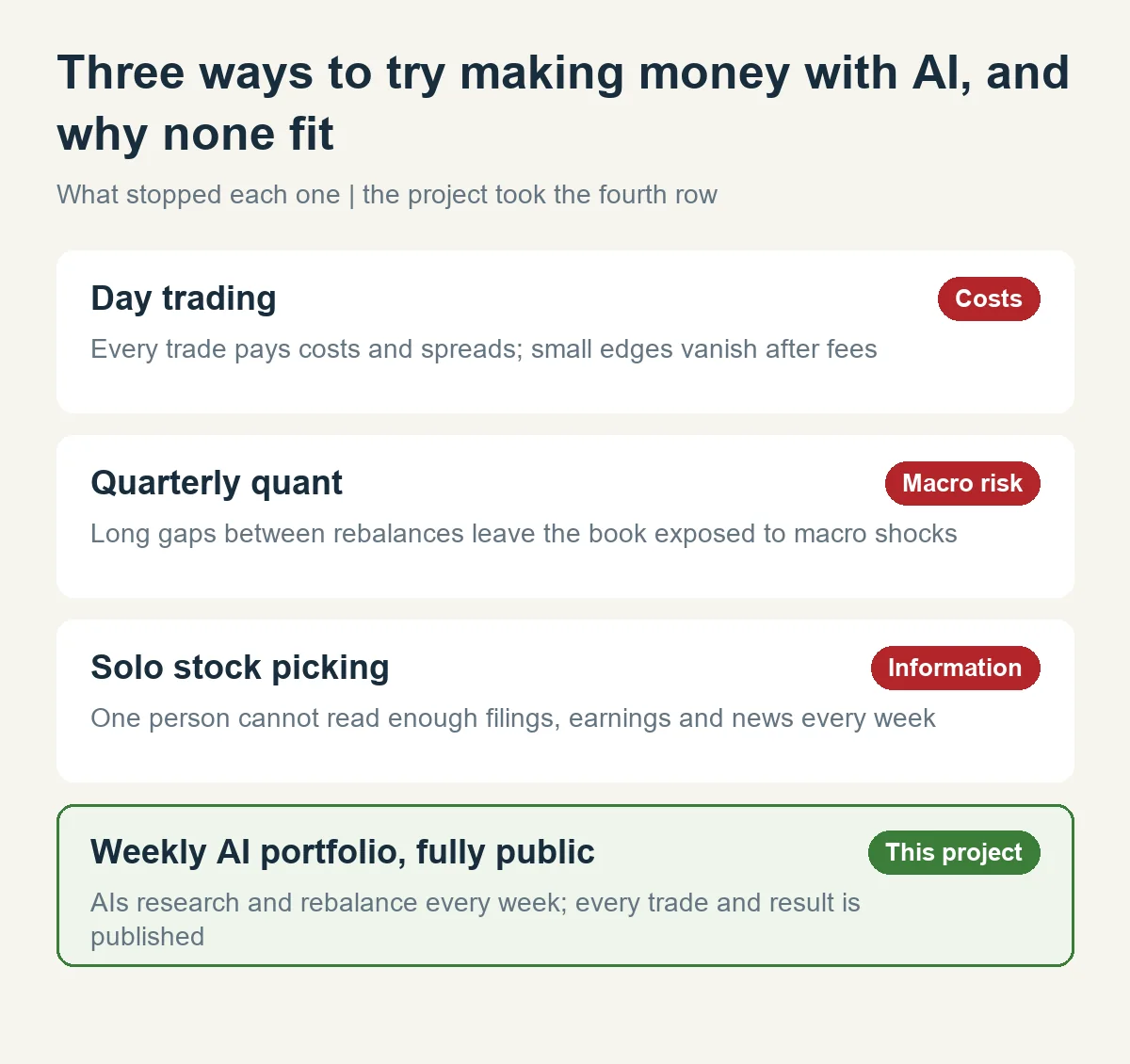
Made by HSL: where each approach got stuck and what this project picked
- Day trading: trading many times a day pays costs and spreads every time; small edges disappear in fees
- Quarterly, quant-style investing: the long gap between rebalances leaves the book open to macro shocks like rates, wars and oil
- Doing it alone: there is not enough time or information to read every earnings report, filing and headline each week
- So I picked the middle: AIs research the market and rebalance every week, and every trade and result is published
Why fully public
- Running it quietly means remembering the wins and forgetting the losses
- Every order, reason and return goes on the project page from day one
- Losing weeks stay up too, so anyone can watch whether AI really beats the market
- It starts as paper trading with no real money. Prices are regular-session closes from the Toss Securities Open API
How it runs
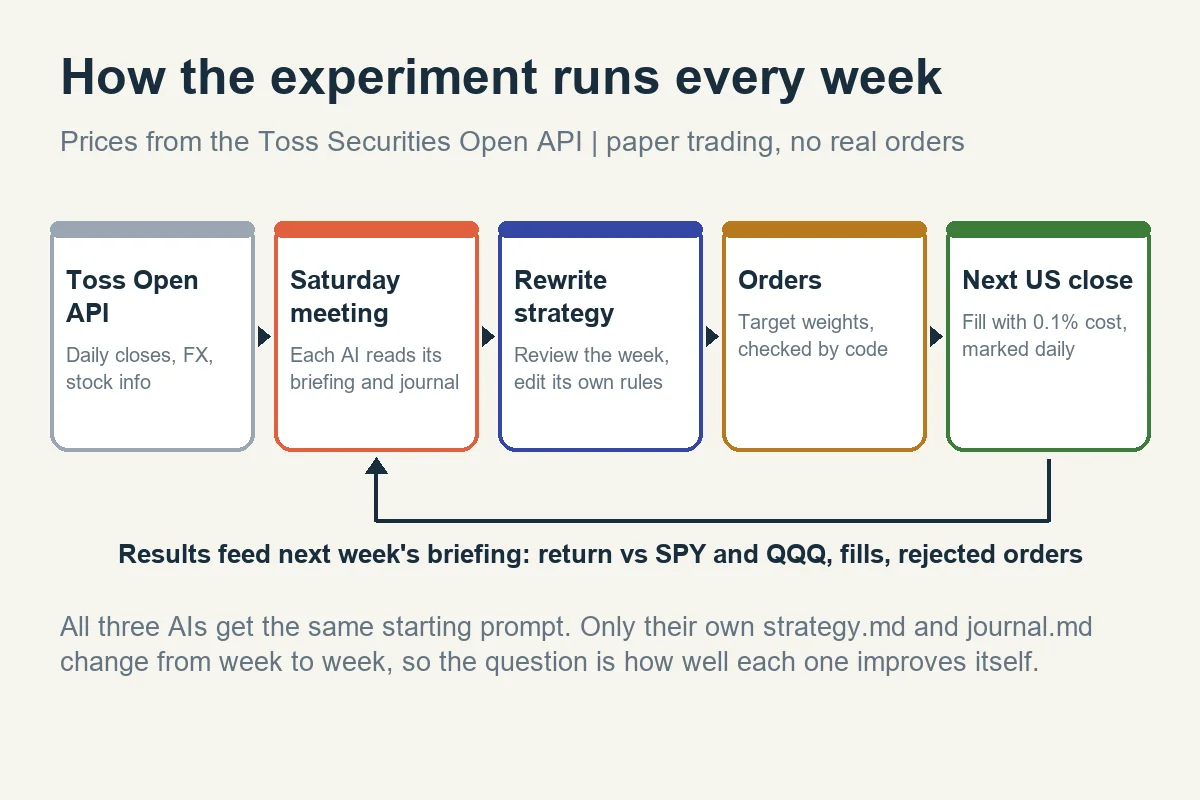
Made by HSL: the loop that repeats every week
- Every Saturday each AI reads a briefing: last week’s return, holdings and rejected orders
- It reviews its last call, rewrites its own strategy document and sets new target weights
- Code checks the orders and fills them at the next US close
- Books are marked to the close every morning and published
- Those results go into the next briefing, which closes the feedback loop
- The next part covers the two AIs in this race and the rules they play by