3-Line TL;DR
- Haiku 5.5 launched on October 7, with large leads over GPT-6 Luna in Anthropic's published computer-use and terminal-work comparisons at Max effort
- It matches Luna's ordinary API rates only through 100K prompt tokens, so the stronger scores do not establish a cheaper finished task
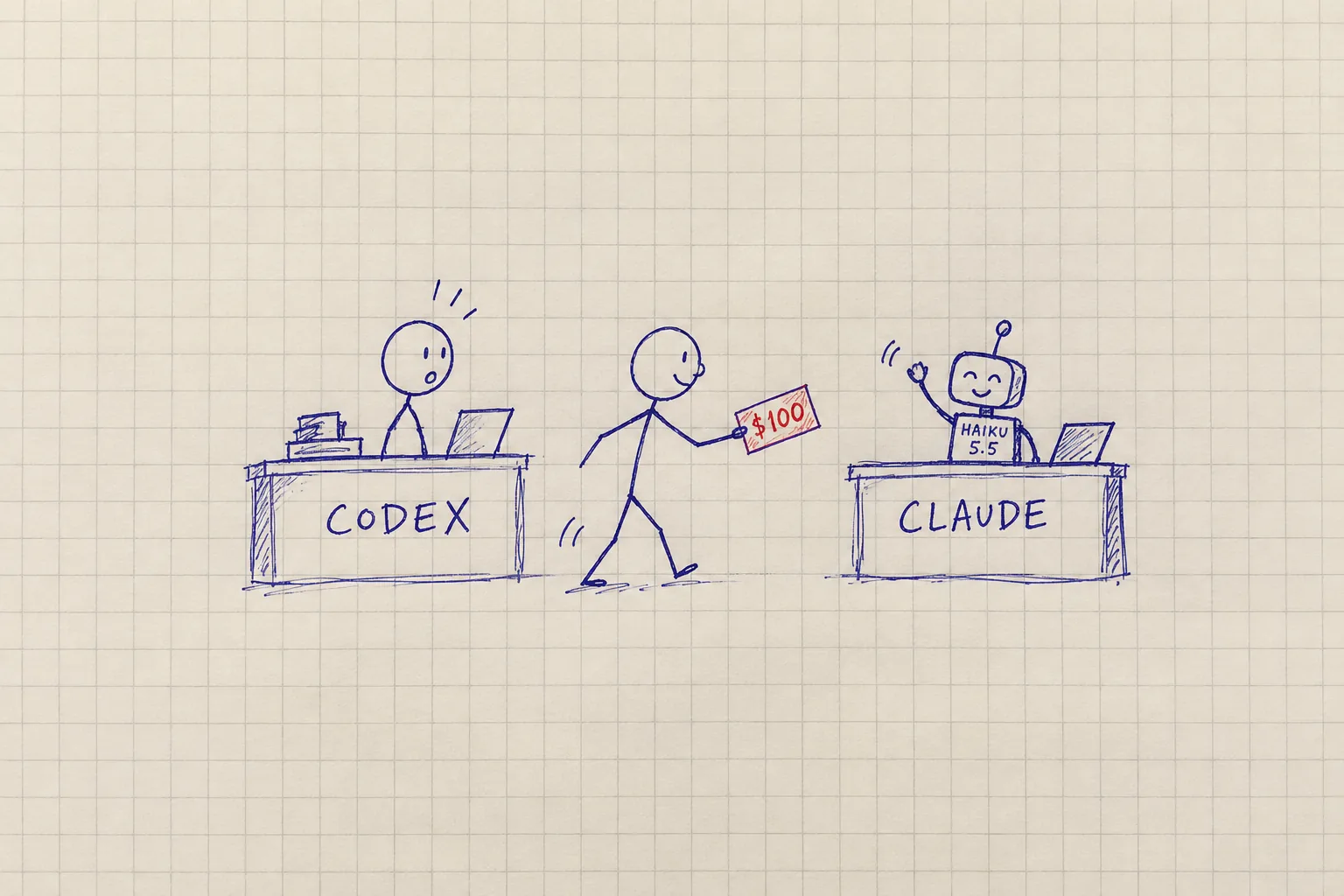
- I plan to move from the $100 Codex plan to Plus and put $100 into Claude Max, while any imminent OpenAI model response remains my expectation
The smallest Claude has opened a substantial gap
- Haiku 5.5 is available in Claude, Claude Code and the API, with effort settings for balancing capability and cost
| Evaluation in the launch comparison | Haiku 5.5 | GPT-6 Luna | Gap |
|---|---|---|---|
| OSWorld 2.1 offline computer tasks, partial credit | 72.4% | 48.9% | +23.5 percentage points |
| Terminal-Bench 4.0 command-line work | 39.2% | 16.4% | +22.8 percentage points |
| FrontierCode 1.1 Main, code changes judged for acceptance | 46.4% | 42.4% | +4.0 percentage points |
Sources: Anthropic's launch table and system card, sections 8.3, 8.4 and 8.9.3; Max effort, checked October 8, 2026
- OSWorld's 72.4% is partial credit across checkpoints, rather than the percentage of tasks completed perfectly
- Anthropic ran Luna on the same offline computer tasks, while the terminal figure comes from the public leaderboard using Codex instead of Claude Code
- These are published evaluations with different agent setups, without an equal-dollar budget or a hands-on Haiku test by this blog
The same price lasts only through 100K tokens
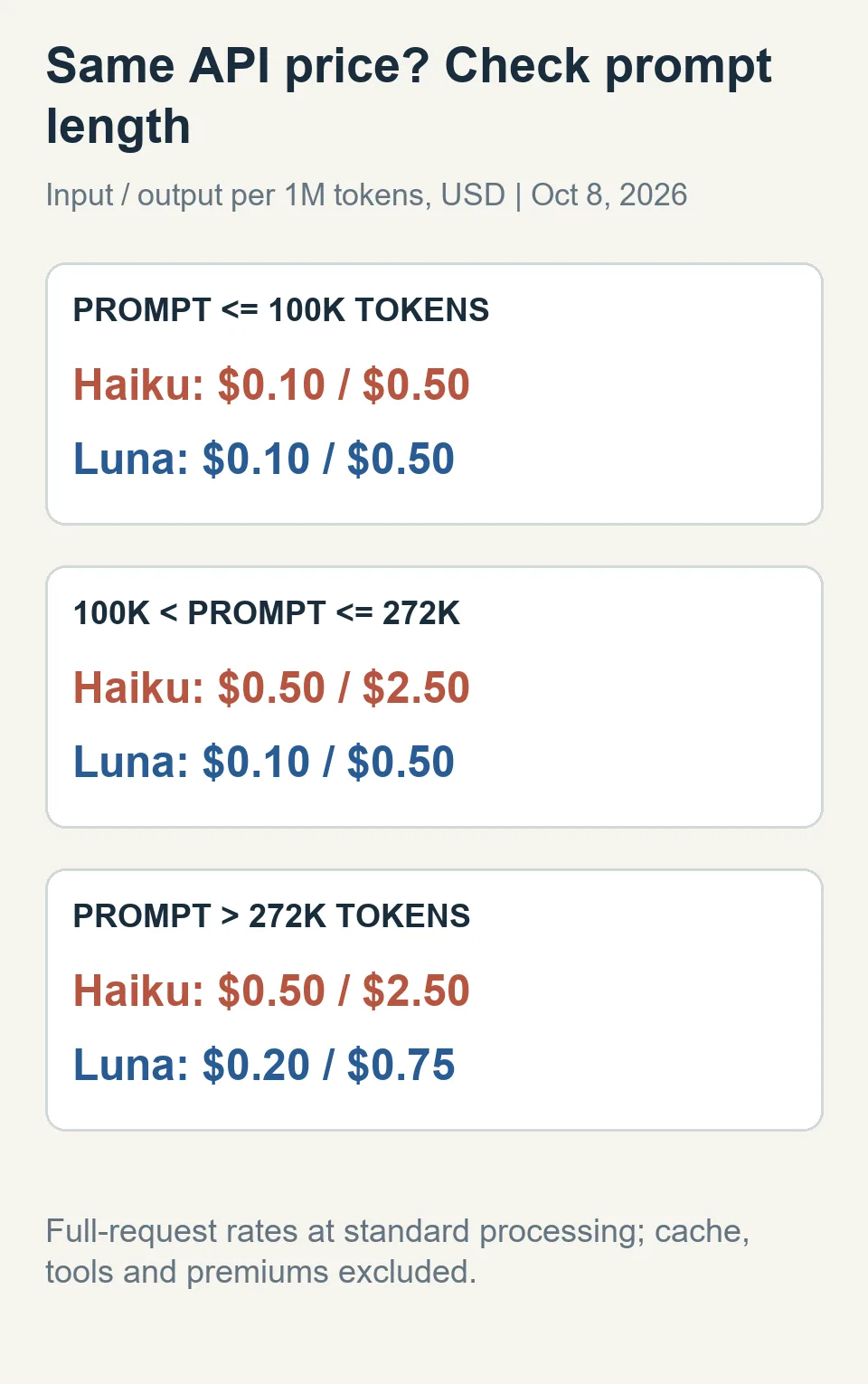
HSL diagram using Haiku pricing and OpenAI's Luna documentation; USD per million tokens, standard processing, checked October 8, 2026
- At up to 100K prompt tokens, both charge $0.10 for input and $0.50 for output per million tokens
- Haiku's whole-request rates rise fivefold above 100K, whereas Luna's higher rates begin above 272K input tokens
- The diagram excludes caching, tools and processing premiums, and API charges are separate from subscription allowances
- More tokens and retries can increase the cost of a finished task even when the initial rates match
- A short task is an appealing place to try Haiku; a long session deserves a look at the actual usage
Pacing the frontier still leaves a rival's scorecard to notice
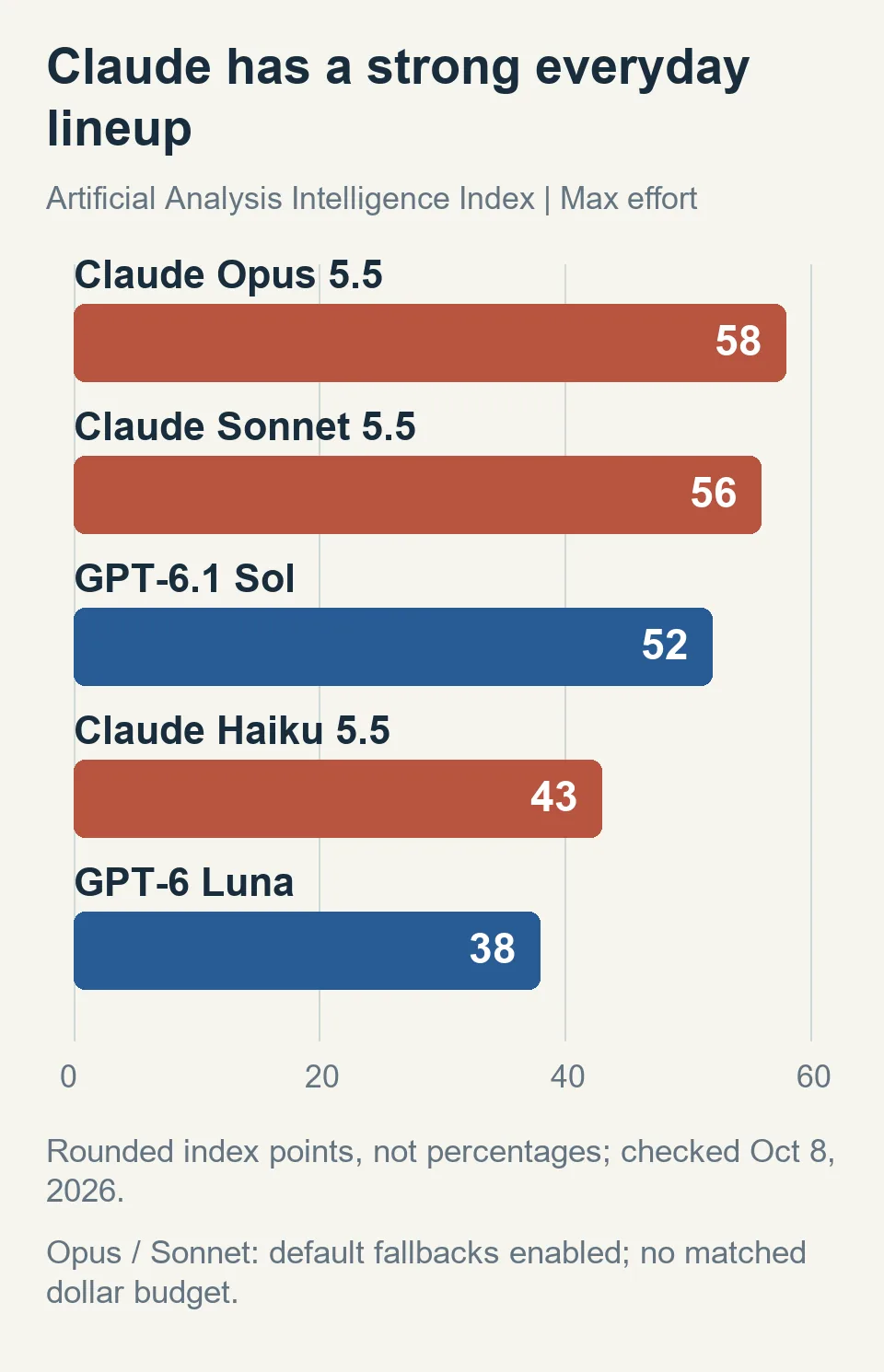
Source: Artificial Analysis, checked October 8, 2026; rounded index points at Max, Opus/Sonnet with default fallbacks; HSL chart, without a matched spending budget
- Beyond the Fable–Astra contest, my current view favors Claude across the models I would consider for everyday work
- These selected index results support that preference, while one index cannot establish a win on every task
- Anthropic described Opus 5.5 as its first release after calling for pacing the frontier, then followed with Sonnet and now Haiku
- OpenAI has also kept releasing products, including GPT-6.1 Sol on September 29
- I expect OpenAI to feel this competitive pressure, and another model announcement soon would not surprise me
- That is a forecast, with no confirmed successor-to-Luna release date established in the sources checked here
- Subscribers can change their spending before either company finishes its next launch presentation
My $100 allocation is moving toward Claude
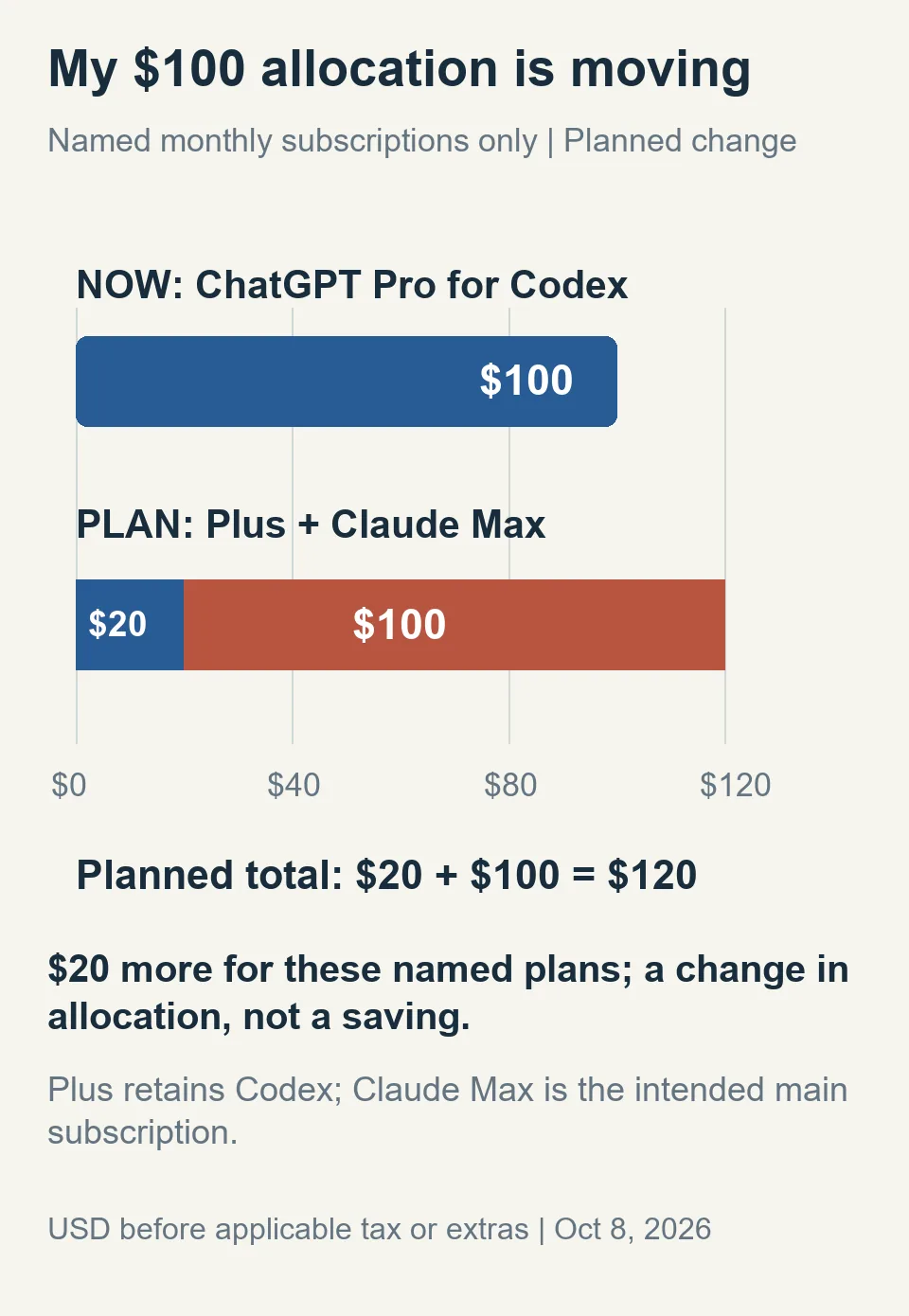
HSL illustration of my plan using OpenAI's monthly prices and Claude's monthly prices, checked October 8, 2026; these subscriptions only, before applicable tax or extras
- I have been using Codex on the $100 plan and intend to downgrade to Plus while taking Claude's $100 Max option
- The stated combination is $20 plus $100, or $120 a month, which adds $20 rather than saving money
- My earlier Sol–Opus–Sonnet article preferred Codex as a working environment while favoring Opus's intelligence
- In my Astra–Opus comparison, Opus's finished output was also the reason my preference shifted
- Keeping Codex on Plus gives me room to change which tool receives the main paid allocation
- I will judge that choice by accepted results, corrections and usable limits on my own work
Community Reactions
- One launch-thread reader calls Haiku's arrival a knockout move (Reddit)
- An r/opencode reader asks for Luna's reasoning setting before trusting the comparison chart (Reddit)
- A reply says Luna already handles work throughout the author's software-engineering day (Reddit)
- A Codex user asks for a Luna 6.1 response after Haiku's release, expressing a wish rather than reporting a launch (Reddit)
Q&A (Field Notes)
- Q. Does Haiku also beat GPT-6.1 Sol?
- The selected AA results put Haiku Max at 43 and Sol Max at 52, so the Luna comparison cannot establish that claim
- Q. Is Max the usual effort setting?
- Haiku's API default is Medium, and the system card shows results changing substantially with effort
- Q. Do I need the $100 plan just to try Haiku?
- Anthropic lists Haiku for Free users too, subject to limits; my Max plan concerns the wider Claude workload
- Q. Does this prove OpenAI is in a business crisis?
- It shows competitive performance pressure and my spending decision, without establishing company-wide revenue or subscriber losses